

Many companies today sit on a goldmine of data but don’t always have the tools or structure to make the most of it. That was the case for one of our multinational B2B clients operating in more than 60 countries. Their teams going from product managers to marketers and local stakeholders, needed reliable insights but often found Google Analytics 4 (GA4) complex and time-consuming to use.
In a B2B context, each market needs to understand how users interact with the website, what content drives conversions, and where friction occurs. The challenge wasn’t just about building reports — it was about creating strong data governance. Our goal was to make analytics accessible for every market through a scalable, standardized, and actionable dashboard.
Laying the foundations - building global alignment
At Semetis, we approached this project not as a dashboard build, but as a multi-market governance framework. The goal was to align every market under the same measurement language and ensure consistent, reliable data across 60+ websites.
-
KPI harmonization: We created a unified KPI framework to establish consistent measurement standards across all markets. We collaborated with both HQ and local teams, to define a standardized taxonomy for all key metrics to ensure common definition and naming convention everywhere. This alignment made comparability between all countries easier and ensured that every stakeholder, from a local marketer to the global CMO, could interpret the data in the same way.
-
Data quality at scale: Keeping data accurate across dozens of websites required a clear and structured setup.. We developed a master DataLayer that defined every variable, trigger, and tag at a global level. This setup was then duplicated for each country. We then opted for a single, centralized GTM container managing all 60+ countries rather than maintaining separate setups per market. We thus created variables to dynamically send the information to the right GA4 local properties. This approach reduced maintenance complexity, eliminated discrepancies between markets and ensured full alignment across implementations
-
Consent management: Consent mode was implemented for all countries. We verified that user consent signals were accurately captured and respected within GTM for all websites, ensuring that tracking only occurred once consent was granted. This step was essential to maintain full compliance with GDPR and to ensure that consent behavior didn’t create inconsistencies in data collection across markets.
-
Infrastructure reliability: We started with Supermetrics, but as the project scaled, we faced performance limitations such as API quota errors, sampling, and slow data refresh. To solve these issues, we migrated to Funnel.io, which provided a more stable and scalable data tool. Funnel allowed us to centralize GA4 data, clean and transform it easily. This upgrade significantly improved dashboard speed, reliability, and scalability across all 60+ countries.
These steps guaranteed that the dashboard wasn’t just visually appealing, it was reliable, future-proof, and designed for scale.
A dashboard as a growth engine
The dashboard is more than a reporting layer, it’s a growth engine for the client’s business. With standardized KPIs and harmonized data, the company can now:
-
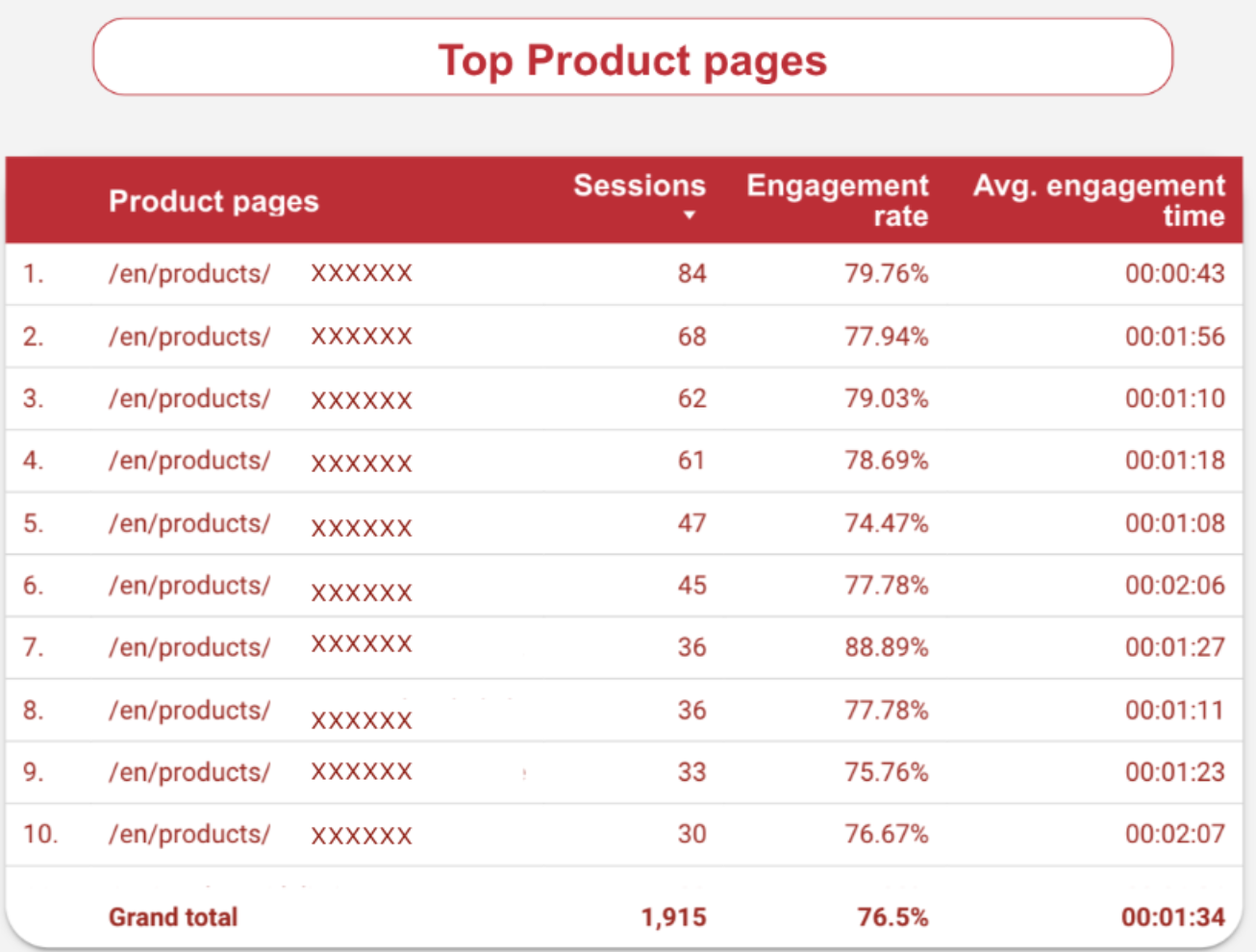
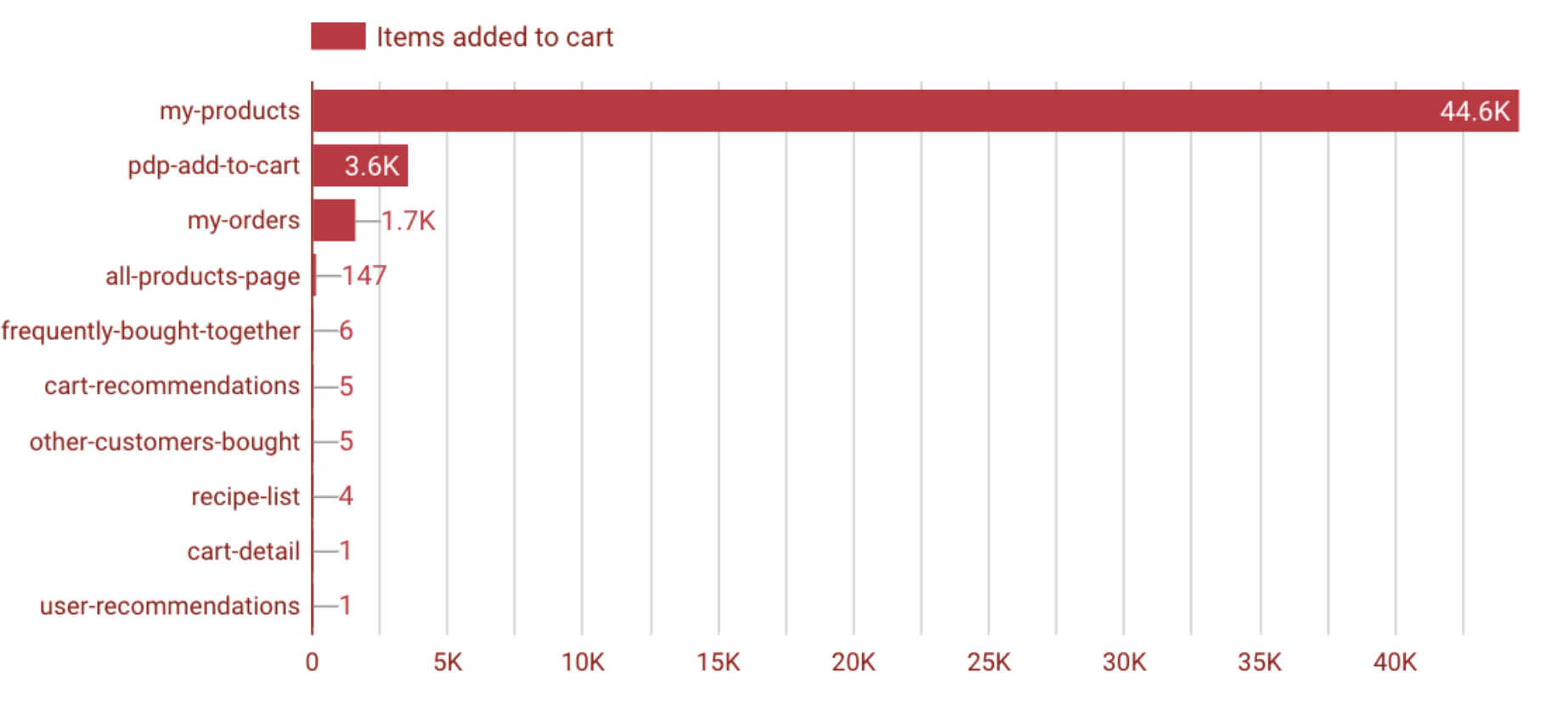
Identify high-performing markets and replicate success across others.The standardized structure allows HQ to benchmark performance across regions with full comparability. When a country demonstrates good engagement or conversion rates, HQ can analyze which products, formats, or channels contributed to that success and share those learnings across all markets. For example, a country that optimized its product detail pages to drive more add-to-basket events can now serve as a best-practice model for others. This creates a continuous improvement loop where top-performing markets lead the way and others can follow with confidence.
-
Spot global trends and make strategic decisions HQ can now detect trends such as product categories underperforming across multiple regions, or markets struggling at specific funnel stages. These insights help prioritize next steps, whether it’s improving the UX, revising content strategies, or boosting product visibility. Instead of local analyses, the dashboard offers a global view on digital performance, helping the company make smarter, faster decisions that drive measurable impact.
-
Enable local markets to act quickly with reliable, market-specific insights. This autonomy not only saves time but also fosters a data-driven culture across all teams. Local managers can quickly detect anomalies, test hypotheses, and take action, while HQ maintains full visibility and control over the global view.
By turning fragmented data into a unified source of truth, the dashboard accelerates decision-making, reduces wasted effort, and helps the client scale its business in a consistent, data-driven way.
Beyond execution: acting as a strategic partner
At Semetis, we position ourselves not just as executors of technical implementation, but as strategic partners. For this client, our role extended beyond “building a dashboard” to:
-
Advising on measurement strategy: Helping them decide what to measure and why, not just how.
-
Creating alignment between HQ and local teams: We acted as mediators, ensuring global consistency without losing local relevance.
-
Future-proofing the setup: By building a scalable infrastructure, we ensured the system could evolve alongside the client’s business.
This partnership mindset transformed analytics from a reporting exercise into a strategic business enabler.
And this is only the beginning. With a strong measurement foundation in place, the next step is to move from descriptive to predictive analytics. By triangulating GA4 insights with campaign, CRM, and sales data, dashboards can evolve into intelligence tools — helping anticipate demand trends, optimize resource allocation, and measure broader brand metrics such as share of search or content effectiveness.
At Semetis, we see dashboards not as static reports, but as living, strategic assets, empowering organizations to make smarter decisions and scale sustainably across all markets.

Shanon Lejeune
| LinkedinThis email address is being protected from spambots. You need JavaScript enabled to view it.
